Blog
Blog
“The Cove” Weds Essay and Narrative Structures
November 24, 2009
Go see The Cove. I missed it at Sundance last year, but I finally saw it in a theater this week. If you are wondering how to structure your documentary, examine this brilliant example of a documentary film that weds a three-act narrative structure with a powerful essay format. Director Louis Psihoyos’ Sundance Film Festival hit follows a team of activists who seek to expose the dolphin slaughter in Taiji, Japan. The story side of the film starts with conflict: our activist hero Ric O’Barry, who trained dolphins for the Flipper TV series, is being followed by the Japanese cops.…
Read More...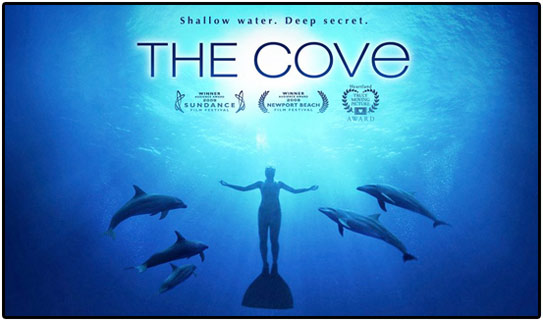
Documentary Film Schools
November 19, 2009
As a story consultant who creates educational resources that documentary filmmakers can apply in their own films, I was happy to see Documentary Magazine’s Fall 2009 issue, which focuses on education and training. Mitchell Block’s article points out an important flaw with many film school curriculums. The programs focus on technical skills rather than the editorial and business skills needed to thrive as an independent documentary filmmaker today. A few years ago, Block named U.C. Berkeley’s Graduate School of Journalism (where I teach editing), the number one documentary school in America. While Block didn’t pick a top school in this…
Read More...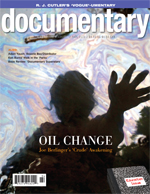
Antarctica Documentary Films Inspired Me
November 18, 2009
Next month I will be traveling to Antarctica for two weeks! I am excited to be manifesting a dream that was born watching the documentary film, The Endurance, at the Sundance Film Festival in 2000. The images from Shackleton’s legendary 1914 expedition astounded me. This vast, untouched, black and white wilderness called forth my sense of adventure and even reverence. Director George Butler urged us Sundance viewers to go to Antarctica as soon as we could, warning that the area would be rapidly changing. Fast forward 8 years. In December 2008 I created a vision board. Pictures of Antarctica have…
Read More...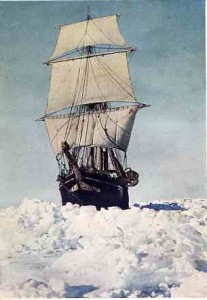
Structuring Biographical Documentary Films
November 17, 2009
Last week I had the privilege of moderating The Lab’s Rough Cut series in San Francisco. The documentary-in-progress, Dreaming in Circus, was a biography of Tony Steele, a 72-year-old world-famous flying trapeze artist. Director Darin Basile, a first time filmmaker, had found a wonderful character in Tony, but he was wrestling with the film’s choppy structure. He encountered a problem that many makers of biographical documentaries face. How do you structure what often ends up being two stories? I ran into this problem in my own biographical documentary of Marlon Riggs, a gay black film maker with AIDS who created…
Read More...
Survey on Hiring Documentary Film Editors
November 12, 2009
I am interested in conducting an informal survey on the fee structure for hiring an editor to cut a documentary film. This isn’t about rates per se. Given our changing economic landscape, I’m curious to know if other documentary editors and producers are charging/paying for editing services by the hour (or day or week) or by the job? Every editor I personally know charges by the hour, day or week–in other words, for a set increment of time. However, I have met producers who expect to pay a set amount to get an editing job done. (Usually they are not…
Read More...Best Practices for Naming Sequences
November 11, 2009
I began hunting for a systematic way to organize sequences soon after I began teaching in the documentary program at UC Berkeley. I noticed that many students were labeling their sequences “final”. The problem with that nomenclature is that there was inevitably one more or more “final final”, creating havoc when I attempted to grade or the class tried to assemble a show. One student labeled his sequences “Final Uno”, “Final Duo,” “Final Tres, etc” to help me out. Then, during a tour of Current TV’s production studios in San Francisco, I encountered a brilliant method for naming sequences and…
Read More...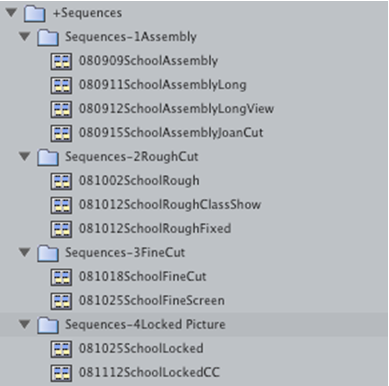
Episodic Story Structure in “The Beaches of Agnes”
November 10, 2009
I saw The Beaches of Agnes last weekend, a quirky personal documentary directed by Agnes Varda, a French artist and filmmaker (The Gleaners and I, 2000). The film was visually interesting, and Agnes herself, an 80-year-old warm woman, was an appealing character. But frankly I had a hard time staying engaged as Agnes revealed one mostly unrelated episode after another. I felt like I was reading a novel with long passages of landscape and character descriptions that never seemed to get going. I even felt a guilty that I was bored. The problem, I surmised as I half-watched the screen,…
Read More...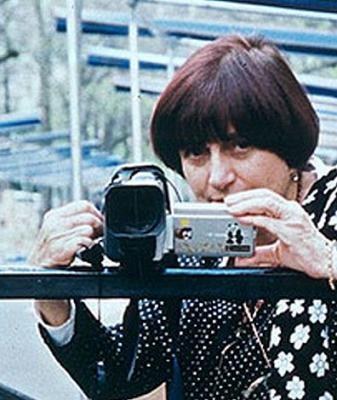
Organizing Your Bins Effectively
November 5, 2009
The majority of non-linear editing systems employ a bin or folder method to help editors organize their footage. This chapter displays screenshots of the Final Cut Pro Studio Browser window, but it is easy to duplicate this strategy in other software programs. Planning your organizational strategy before you start ingesting footage is critical, and for the anal, left-brained editing geeks among us, myself included, this will be fun. For the rest of you, remember that having a clear structural hierarchy for your clips will save you time and money in the editing process, particularly if you have to change editors…
Read More...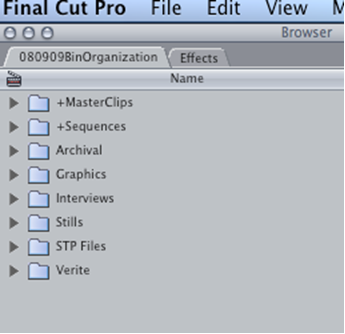
What is Your Documentary Film’s Central Question?
November 4, 2009
I used to think of a film’s central question as a thematic, probing query, such as “How can humans stop war?” or “Why is jealousy a sanctioned emotion in monogamous relationships?” But those kind of questions are far too existential for most character-driven documentary films. Think more practically, as screenwriters do. Will Romeo and Juliet stay together? Will the sheriff kill the shark? Will the Jordan family save their farm? The central question is always some variation of the question, “Will the protagonist reach his goal?” A documentary’s inciting incident gives rise to the protagonist’s quest-alternately called the “hero’s journey”…
Read More...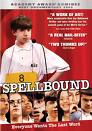
Contriving the Plot for a Personal Documentary
November 3, 2009
I noticed that a recent New York Times book review of the book No Impact Man (10/18/09), made a salient point that could easily be applied to personal documentaries. Reviewer Alexandra Jacobs says, “The book exemplifies an increasingly popular subgenre that involves setting oneself a task, usually for a year, and writing about it in an online diary before committing the account between covers.” She also point out that “the approach has its advantages: narrative boundaries are clearly defined; an author can build a following; live reader form feedback informs his ideas.” A similar trend is underway in the genre…
Read More...