Blog
Blog
Expanding the Documentary Trend in Contrived Quests
January 7, 2010
I recently wrote this article for SF360, the online magazine for documentary filmmakers, which I thought you’d find interesting as we enter the New Year. There is a new trend in documentary storytelling that has its roots in the 2004 hit Supersize Me and will likely morph into new forms in the coming year. Documentary filmmakers are tinkering with, fine-tuning and expanding on the idea of constructing a story arc that goes something like this: I’ll attempt this crazy, quirky, or impossible feat for X amount of time and in the process, reveal something important about a troubling social issue.”…
Read More...Sync Your Collaboration Styles
December 17, 2009
HAVE YOU ever sat with an editor in your office, asked them to suggest a line of narration and then been met with a blank look? Before jumping to the conclusion that your editor is inept, consider that she might be a brilliant introvert. Tip #6 Sync Your Collaboration Styles. How do you like to work with editors? Do you want to be in the edit room (on your premises) and sit with your editor several hours a day? Or do you prefer to hand off the digital files and leave your editor to work in their own space for…
Read More...Demand Superior Communication Skills
December 16, 2009
CREATIVE conflicts are fine as long as they don’t deteriorate into personality conflicts. The most deadly personality clashes will cost you big time, because you will either be stuck with miserable rapport or foot the bill to hire someone else. Most directors suffer with the former because after investing in an editor to watch hundreds of hours of footage, they can’t afford to hire someone else to start from scratch. All this can be avoided if you make the right hiring decision. Tip #5: Demand Superior Interpersonal Communication Skills. How will you know if someone is a good communicator? In…
Read More...
Get More Than Your Money’s Worth
December 15, 2009
THE FIRST THING most directors ask upon finding a potential editor is, “What’s your fee?” Then they check their budget to see how many weeks of editing they can afford. To really make a great hiring decision in today’s economy, you need to ask a few more questions. Tip #4: Get More Than Your Money’s Worth I don’t mean that you should exploit your editor by demanding 10-12 hour days. In a recent thread in Doculink, editors railed on directors with unreasonable expectations: dozens of DVD’s of various cuts, twenty email responses in a day, and extensive handholding throughout reshoots. …
Read More...Vet Your Editor’s Ego
December 10, 2009
ONE of the biggest reasons directors fire their editors is role confusion. Either the director thinks they’re an editor, or the editor is a closet director. In the indie world, job descriptions frequently overlap, but it’s useful to envision the director as the film’s captain and ultimate creative decision-maker. The editor is the first mate, a structural navigator, and storytelling specialist. Now, since you can’t afford to get this part wrong in today’s economy, how do you trust your editor to steer the right course while you maintain control of the ship? Tip #3 Vet Your Editor’s Ego One way…
Read More...Demand Business Savvy
December 9, 2009
IMAGINE that you’ve found an editor who understands your vision, listens well and has more awards than you as a director can ever hope to win. With a sense of relief you prepare to sign on the dotted line … but discover that your editor is reluctant. “We really can’t put deadlines into the contract,” says your potential editor, “We don’t know how long it will take to edit the film.” Five months later you are only at rough cut stage. Your post-production budget is spiraling out of control. The invoices keep coming. And your editor trusts you to pay…
Read More...Hire an Editor Who Shares Your Sensibility
December 8, 2009
YOU ARE getting ready to hire an editor and start asking colleagues for referrals. Soon you have a short list of top editors. You make a few phone calls. You quickly realize you either can’t afford these big names, or they aren’t available. Or perhaps, given our challenging economy, a few of them are actually wooing you … and yet… something’s not clicking. Something you can’t quite put your finger on… Tip #1: Find An Editor Who Shares Your Sensibility. The dictionary defines “sensibility” as “a mental or emotional responsiveness toward something”. In this case, that “something” is your film,…
Read More...Humor Delivers Activist Message in “Good Hair” Documentary
December 2, 2009
Black people should wear their nappy hair with pride. That’s the message I thought Chris Rock would drive home at the end of his humorous documentary essay on the hair styling habits of African American women. I was wrong. Narrator Rock starts the award-winning film Good Hair (2009) by introducing us to his two little daughters, one of whom thinks she has “bad hair”. “I wonder what she got that idea,” asks Rock. But the bulk of the documentary is not spent investigating the roots of Anglo-centric models of beauty. Rather, the documentary wisely takes a slightly different tack. The…
Read More...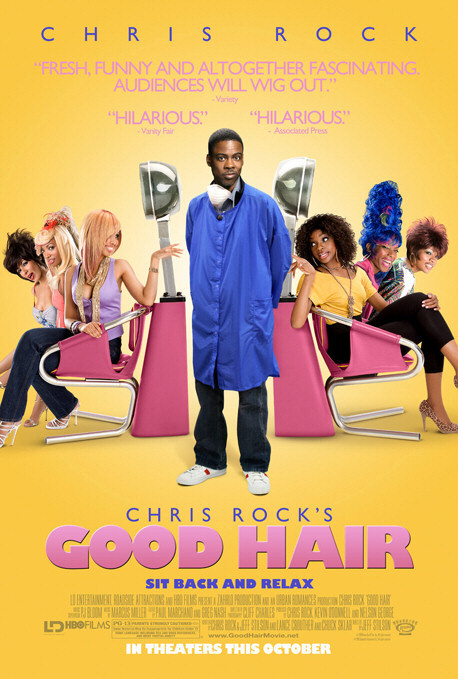
“Afghan Star” Documentary Uses Contest Structure to Build Suspense
December 1, 2009
I saw Director Havana Marking’s film Afghan Star (2009) this week. This character-driven documentary is structured around four contestants’ quest to win an American Idol style contest, an entertaining matchup that takes the formerly Taliban-ruled country by storm. Structuring a film around a contest is a tried and true method that I teach in documentary classes. Wedding the plot points of a character-driven competition with the intellectual points of a documentary essay makes for a highly watchable film. Witness the Oscar-nominated La Corona (2008), about a beauty contest in a women’s prison in Columbia; Mad Hot Ballroom (2005), about New…
Read More...
The Problem of Pacing
November 25, 2009
Having gauged the film’s direction with the help of a midpoint, many editors’ biggest challenge in act two is sustaining momentum. A screenwriter can plot progressive complications without being constrained by journalistic ethics, but what can a documentary filmmaker do if the actual chronology of conflict ebbs and flows rather than steadily escalates? How can he ramp up the action while staying true to the facts? Since act two is the longest act (a little more than half the film), it is imperative that the editor ratchets up conflict. Ideally, each barrier the protagonist faces should be more daunting than…
Read More...