Blog
Blog
“Race to Nowhere” is a Clever Topic-Based Film
October 9, 2009
I’m very excited to announce the premiere of Race to Nowhere, a film that I worked on as a story consultant. When I saw the first assembly last spring, the documentary-in-progress suffered from three big problems. First, director Vicki Abeles’ own strong story was only marginally present. Noting that Vicki was very compelling on camera as a concerned mom turned crusader for a more humane educational system, we beefed up her narrative arc throughout the film, making the midpoint the moment when she first realized that her kids’ insane homework schedule had to stop. Second, this topic-based film needed…
Read More...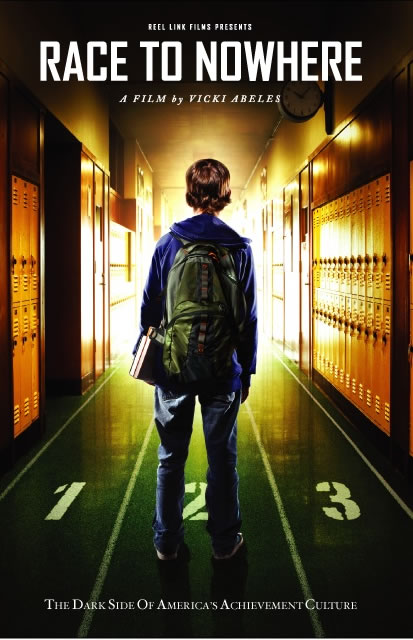
“No Impact Man” Crafts A Great Documentary Opening Scene
October 8, 2009
After having relished a “fun documentary” last week, The September Issue, my girlfriend Lynn obliged me by going to see a hard-hitting investigative documentary, Crude. Frankly I wasn’t too hot to see what I thought would be a downer, but hey, I missed it when I went to Sundance and Director Joe Berliner is a great filmmaker. As we were buying tickets, we noticed that No Impact Man, was playing down the hall. As we watched the first few minutes of Crude, I saw that Lynn seemed tired and checked out. I whispered, “Let’s go see No Impact Man,” and…
Read More...
Do You Have a Documentary Story?
October 6, 2009
One of the first questions I ask my clients is whether their documentary film is character-driven or topic driven. If they are not sure or say “both”, my second question is “what does your protagonist want?” When appropriate, I ask them to leave their own film on the shelf for a moment and join me for a mini tutorial on story structure. I invite them to see that a story, in the screenwriter’s sense of the word, is not a profile (for example, Crumb, a slice of life look at a famous animator) or an essay (Warner Herzog’s poetic…
Read More...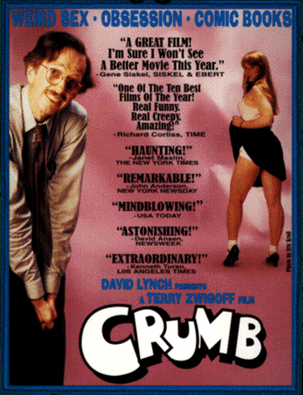
Constructing a Story Arc for A Personal Documentary
October 3, 2009
I am working with a new client, a first-time filmmaker who is wisely consulting with a story editor (me) in pre-production. Her personal documentary emerges from her riveting family story of war and refugee camps. I am urging her to hone in on the protagonists’ desire in her earliest concept paper, before shooting. We are also outlining her narrative arc, keeping in mind that documentaries do not fit tidily into three acts. Having said that, I reminded her that devising a three-act structure does not mean dividing the film into three parts, and then arbitrarily labeling each part an act. …
Read More...Designing Documentary Film Plot Twists
October 2, 2009
Screenwriters are free to dream up plot twists for a three-act story, but we documentary filmmakers must design scenes based on what was actually filmed in real life. These two constraints–“what was filmed” and “real life”–present special challenges. Whether a documentary editor is using a three-act storyboard or some other narrative design, how does she stay true to actual happenings when she must persuade and contort them into climaxes and plot turns? I’m teaching my popular weekend seminar, “Structuring the Character-Driven Documentary,” on October 10 and 11 at the San Francisco Film Society. This class will outline the principles…
Read More...A Call for Inspiring Documentary Films
September 28, 2009
The weekend is approaching, and my girlfriend and I are planning to take in a documentary Saturday night. Our choices are Crude, an “infuriating story about Big Oil and little people”, according to the New York Times, and Capitalism: A Love Story, the new Michael Moore film. Both appear to be depressing indictments, although Moore’s film will probably make me laugh, so it’s slightly more appealing. What are so many documentaries downers? My girlfriend was very happy last week when we saw The September Issue, remarking, “It was nice to see a documentary that wasn’t depressing.” Clearly many American…
Read More...
How to Rate Your Documentary’s Story Potential
September 25, 2009
“We’ll fix it in post,” may work fine when you forgot to white balance or turn off a noisy air conditioner, but if you forgot to vet your story potential, constructing a narrative arc in the edit room may prove a bit challenging. I recently worked with a director who was taking advantage of my free initial consultation, in which I rate the story potential of a director’s documentary. I had watched her trailer and read her synopsis the night before, and while the protagonist of her film was clearly admirable for her compassion and generosity, I was,…
Read More...September Issue Reveals Great Documentary Opening
September 14, 2009
I recently saw The September Issue, an engaging documentary about life at Vogue magazine under the helm of Anna Wintour. Watching the opening scene from a structural point of view (yes, I was still able to enjoy the film!), I was reminded of an old Hollywood film precept: the first person you see in a film should be the protagonist. In this case, the film opens with Anna, editor-in-chief at Vogue, reflecting on how the general public sees high fashion as frivolous. I thought this was a good way to introduce the protagonist, an anything-but-frivolous character! (She sees her biggest…
Read More...Oscar-winning “Man on Wire” Epitomizes Storytelling Vogue
February 24, 2009
Sunday’s Oscar pick for Best Documentary Feature was surprising in that it eschewed the usual social issue film that generally wins big awards. However, I was thrilled when Megan Mylan, a graduate of our documentary program at UC Berkeley, won Best Short for her social issue drama Smile Pinki. At Cal, we teach our documentary students that there are several time-honored ways of structuring documentaries. Man on Wire, which might have won top honors on its classy reenactments and lush archival footage alone, epitomizes the kind of character-quest films that have dominated the documentary scene for more than a decade.…
Read More...
Trojan Horse Trend Running Strong at Sundance
January 26, 2009
I’m just back from the 2009 Sundance Film Festival, where I adhered to a lean diet of one documentary per day and no narrative films, intent on meeting and mingling with as many world-class documentary filmmakers as possible. Of the sixteen documentaries in U.S. Competition, ten were character-driven stories, five were essay or theme-based films, and one was an interesting portrait. And of the eleven documentary films that took home awards, ten were character-driven films! It seems that fifteen years after the theatrical success of Hoop Dreams (1994), the trend in character-driven documentaries is clearly still surging. When the documentary program director…
Read More...